For B2B buyers, procurement managers, and home goods retailers, sourcing the right household products is a delicate balance of cost, quality, and consumer satisfaction. When it comes to laundry essentials, the Folding Laundry Drying Rack is a high-demand SKU. However, it is also a product highly susceptible to quality complaints.
A flimsy drying rack leads to negative reviews, high Return Merchandise Authorization (RMA) rates, and damaged brand reputation. To capture the growing eco-conscious market of consumers shifting away from electric tumble dryers, supplying a robust, wobble-free product is paramount.
This comprehensive guide breaks down the engineering, material selection, and structural design required to ensure the stability and strength of a folding clothes drying rack.
What Makes a Folding Clothes Drying Rack Stable?
To capture the Featured Snippet for this common search query, here is the executive summary of what guarantees a stable and strong clothes drying rack:
-
High-Gauge Tubular Metal: Utilizing rust-resistant 304 stainless steel or aerospace-grade aluminum with a tube thickness of at least 0.6mm.
-
Reinforced Joints: Replacing standard brittle plastics with heavy-duty aluminum alloy hinges or thickened, UV-resistant ABS plastic at key folding intersections.
-
Optimized Center of Gravity: An X-frame or A-frame structural design that distributes weight evenly across the base, preventing tipping when loaded asymmetrically.
-
Anti-Slip Base Feet: Wide, thermoplastic elastomer (TPE) or rubberized grips that lock the rack to the floor, preventing sliding on tile or hardwood.
-
Tested Weight Capacity: A certified load-bearing capacity exceeding 50 lbs (approx. 22.5 kg) to handle heavy, wet garments like winter coats and thick towels.
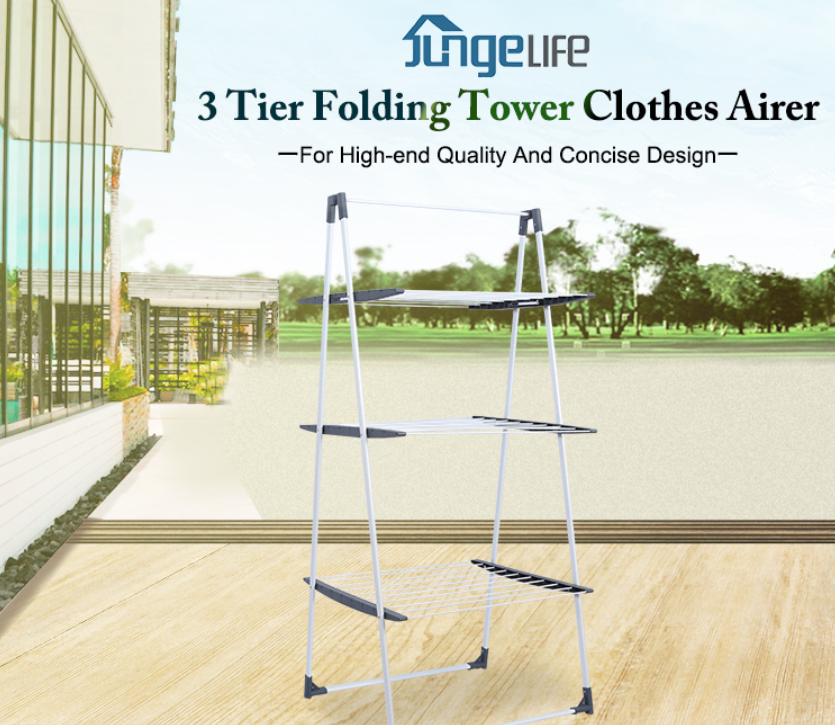
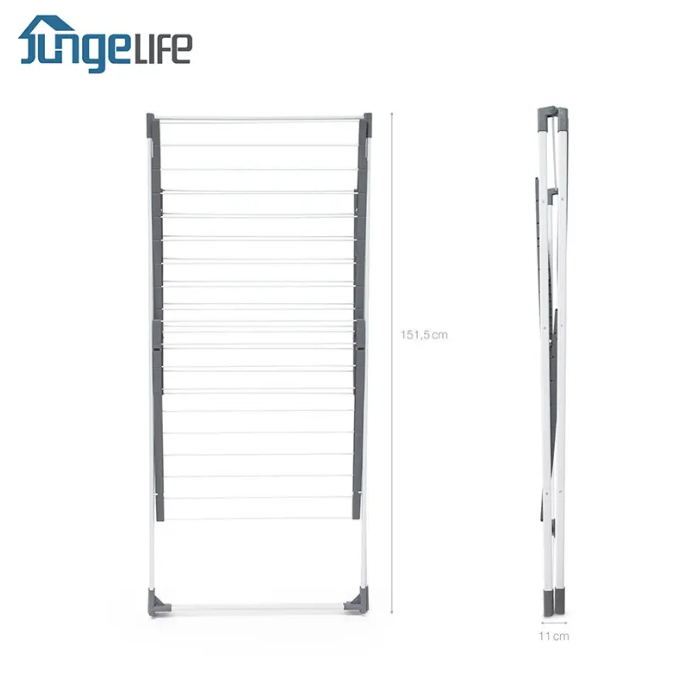
1. Material Selection: The Foundation of a Strong Drying Rack
The fundamental strength of any rack begins with the raw materials. For wholesale buyers, understanding the cost-to-durability ratio of different metals is essential for targeting the right consumer demographic.
Comparing Common Drying Rack Materials
| Material Type | Strength & Stability | Rust Resistance | Weight | Best B2B Application |
| 201 Stainless Steel | Moderate to High | Low to Moderate | Heavy | Budget-friendly indoor models. |
| 304 Stainless Steel | Very High | Excellent | Heavy | Premium, heavy-duty indoor/outdoor racks. |
| Carbon Steel (Coated) | High (if thick) | Poor if scratched | Very Heavy | High-load industrial or commercial racks. |
| Anodized Aluminum | High | Ultimate (Rust-proof) | Lightweight | Premium consumer models; lower shipping costs. |
Expert Insight: While material type is crucial, tube thickness (gauge) dictates actual stability. A folding rack made of ultra-thin stainless steel will easily buckle under the weight of wet jeans. Sourcing products with a minimum tube wall thickness of 0.6mm to 0.8mm drastically reduces the risk of bending or structural failure.
2. Structural Design and Joint Integrity
A clothes drying rack is only as strong as its weakest folding joint. Because a folding laundry drying rack requires constant collapsing and expanding, the mechanical stress on the hinges is immense.
The X-Frame vs. Gullwing Design
-
The X-Frame: Offers superior vertical load-bearing capacity. The crossing legs naturally distribute downward force directly into the floor. This design is highly stable but often offers less linear hanging space.
-
The Gullwing (T-Shape): Provides maximum hanging area, but the cantilevered wings can cause the rack to tip if unbalanced. To ensure stability here, manufacturers must use heavy-duty locking mechanisms at the wing joints and a wider, heavier base stance.
The Importance of Rivets and Hinges
Many low-cost manufacturers use snap-fit plastic joints to save on assembly time. For true strength, look for racks assembled with stainless steel rivets or bolted metal hinges. If plastic must be used to keep weight down, ensure it is High-Density Polyethylene (HDPE) or Polycarbonate, which resist the brittleness caused by indoor heating and outdoor UV exposure.
3. Real Consumer Data: Why Stability Dictates Sales
Understanding end-user behavior is critical for retail success. Recent home-goods consumer satisfaction surveys from 2025 reveal striking data regarding laundry accessories:
-
68% of 1-star reviews for clothes drying racks specifically cite "wobbling," "flimsy," or "collapsing under wet towels" as the primary reason for a negative rating.
-
45% of consumers are willing to pay a 30% premium for a rack that explicitly advertises "heavy-duty" or "holds up to 60 lbs."
-
Only 12% of returns are due to rust; the vast majority are due to structural failure at the plastic joints.
The Takeaway for Procurement: Sourcing a product that is marginally cheaper but suffers from poor joint integrity will ultimately cost more in reverse logistics and damaged e-commerce metrics. Quality engineering directly protects your profit margins.
4. Future Industry Trends: Where the Market is Heading (2026-2027)
As living spaces become more compact globally, and energy costs drive consumers away from traditional dryers, the folding laundry drying rack market is evolving rapidly. Here are the trends procurement managers must watch:
-
Aerospace-Grade Aluminum Adoption: To combat high global shipping costs, manufacturers are shifting toward advanced aluminum alloys. These offer the strength of carbon steel but weigh 40% less, allowing B2B buyers to fit more SKUs into a standard shipping container, drastically reducing landed costs.
-
Modular & Telescopic Designs: Consumers in urban apartments demand high capacity in small footprints. Racks with telescopic, extendable rods that lock securely into place using friction-lock technology are trending heavily.
-
Eco-Friendly Coatings: Moving away from toxic paints, the industry is embracing sustainable powder-coating processes that are highly resistant to chipping, extending the lifespan of the rack and appealing to eco-conscious demographics.
5. Solutions & Benefits for B2B Buyers
By prioritizing the structural integrity and material quality of the drying racks you source, you provide a direct solution to a major consumer pain point. Here is how focusing on stability benefits your business model:
-
Reduced RMA & Customer Support Costs: A robust product doesn't break. Fewer breakages mean your customer service team spends less time processing returns and issuing refunds.
-
Higher E-commerce Rankings: Products that perform well receive 4.5+ star reviews. On platforms like Amazon, Wayfair, or your own independent station, higher reviews lead to better organic visibility and higher conversion rates.
-
Brand Authority & Customer Lifetime Value (CLV): When a consumer trusts the quality of your household goods, they are significantly more likely to return to your site for other storage, organization, or home improvement products.
-
Premium Pricing Power: By clearly marketing the engineering behind the stability (e.g., highlighting 0.8mm wall thickness or aircraft-aluminum hinges in your product descriptions), you can justify a higher retail price point, increasing your gross margin per unit.
Elevate Your Inventory Today
Ensuring the stability and strength of a folding laundry drying rack requires a deep understanding of metallurgy, structural design, and user intent. By prioritizing high-gauge materials, reinforced mechanical joints, and balanced designs, you can offer a product that completely outclasses generic, flimsy alternatives on the market.
Are you looking to source heavy-duty, meticulously engineered laundry solutions that guarantee customer satisfaction and high profit margins?
[Explore our premium catalog of heavy-duty folding clothes drying racks today and secure your wholesale pricing.] Would you like me to help draft a specific product landing page or an email outreach template to promote this product line to your retail partners?
Post time: Mar-09-2026